Roasted Seasonal Vegetables
Roasted Seasonal Vegetables are a vibrant and nutritious dish that celebrates the flavors of fresh produce. This recipe is perfect for showcasing the best of the season's bounty. The combination of roasting techniques enhances the natural sweetness and texture of the vegetables, creating a mouthwatering experience. Ideal for any occasion, these vegetables can be served as a hearty side or a wholesome main dish. Whether you are entertaining guests or enjoying a family meal, this dish brings warmth and color to your table.

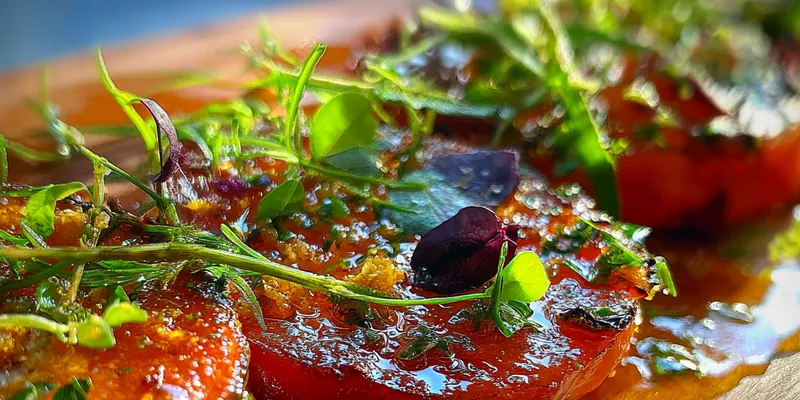
Why This Roasted Seasonal Vegetables Works
The key to perfect roasted vegetables lies in the technique of high-heat roasting, which caramelizes natural sugars and enhances flavors. By cutting vegetables into uniform sizes, you ensure even cooking, allowing every piece to achieve that desirable golden-brown exterior. Additionally, the right amount of olive oil helps to create a crispy texture while preventing dryness. The use of a variety of seasonal vegetables adds layers of flavor and texture to the dish.
What makes this recipe truly special is its versatility; you can mix and match vegetables based on what is in season or what you have on hand. This not only helps reduce food waste but also allows for creativity in the kitchen. The fragrant herbs elevate the dish, making it appealing to both the eyes and the palate. Perfect for a weeknight dinner or a festive gathering, these roasted vegetables are sure to impress.
💡 Professional Tip
For an extra layer of flavor, consider adding a splash of balsamic vinegar or lemon juice just before serving. This simple addition can brighten the flavors and add a delicious tang. Also, when storing leftovers, keep the roasted vegetables in an airtight container to maintain their texture. Finally, don’t hesitate to experiment with different herbs and spices to customize the dish to your taste.
Frequently Asked Questions
Yes, you can prepare the vegetables ahead of time by cutting and seasoning them. Store them in an airtight container in the refrigerator for up to 24 hours before roasting. This makes it convenient for meal prep, especially during busy weekdays. Just be sure to toss them with a little olive oil again before roasting to keep them fresh.
You can substitute any seasonal vegetables you prefer. For instance, Brussels sprouts, cauliflower, or sweet potatoes work beautifully in this recipe. Additionally, if you don’t have certain herbs, feel free to use fresh basil, rosemary, or even Italian seasoning. The beauty of this dish lies in its flexibility, allowing you to tailor it to your personal taste.
Your roasted vegetables are done when they are tender and have a golden-brown color. You can test them by piercing with a fork; they should easily give way. If you prefer a crispier texture, you might roast them a little longer, but keep an eye on them to avoid burning. The aroma should also be a good indicator that they are ready to serve.
While it’s possible to freeze roasted vegetables, they may lose some texture upon thawing. If you choose to freeze them, let the vegetables cool completely before placing them in freezer-safe bags. They can last up to 3 months in the freezer. When you’re ready to eat, reheat them directly from frozen in the oven for the best results.
Roasted Seasonal Vegetables pair wonderfully with grains like quinoa or brown rice for a complete meal. They also complement grilled meats or fish beautifully, making them a versatile side dish. For a vegetarian option, serve them over a bed of leafy greens with a drizzle of balsamic glaze. You can also toss them with pasta for a hearty and satisfying dish.
Leftover roasted vegetables can be stored in an airtight container in the refrigerator for up to 3 days. To maintain their flavor and texture, reheat them in the oven or on a skillet rather than the microwave. If you need to keep them longer, consider freezing them as mentioned earlier. Just remember to allow them to cool completely before transferring to storage.
You can easily adjust the spice level of this dish by adding a pinch of red pepper flakes or using spicy seasonings. If you prefer a milder taste, simply reduce or omit any spicy ingredients. This recipe is very forgiving, making it easy to customize according to your preferences. Don't hesitate to experiment until you find the perfect balance for your palate.
The best way to reheat roasted vegetables is in the oven. Preheat the oven to 350°F (175°C) and place the vegetables on a baking sheet, spreading them out evenly. Heat for about 10-15 minutes, or until warmed through. This method helps retain their crispiness compared to microwaving, which can make them mushy.
Recipe Troubleshooting Guide
Too Dry
Problem: If your roasted vegetables turn out too dry, they may not have had enough oil or were overcooked.
Solution: To prevent this in the future, ensure you use sufficient olive oil when tossing the vegetables and watch the cooking time closely. Adding a dash of vegetable or chicken broth can also help to add moisture during reheating.
Not Crispy
Problem: If the vegetables are not crispy, it could be due to overcrowding on the baking sheet or not enough oil.
Solution: Make sure to spread the vegetables in a single layer with space between each piece. If needed, roast in batches to achieve that desired crispiness.
Overcooked
Problem: Overcooked vegetables can become mushy and lose their flavor.
Prevention: To avoid this, always keep an eye on the cooking time and adjust according to your oven. The vegetables should be tender yet firm; a fork should easily pierce them without them falling apart.
Undercooked
Problem: If the vegetables are undercooked, they may still be hard and lack flavor.
Recovery: Simply return them to the oven for a few more minutes until they reach the desired tenderness. Stirring them can also help ensure even cooking.
Burnt
Problem: If your vegetables are burnt, they may have been left in the oven for too long or cooked at too high a temperature.
Prevention: To prevent burning, always set a timer and check on the vegetables periodically. If you notice them starting to brown too quickly, reduce the oven temperature and continue roasting until done.
Flavor Balance
Too Sweet: If your dish tastes too sweet, it may be from the natural sugars in certain vegetables.
Too Salty: If it's too salty, try adding a splash of vinegar or lemon juice to balance it out.
Bland: If the vegetables taste bland, consider adding more seasoning or a sprinkle of fresh herbs before serving.
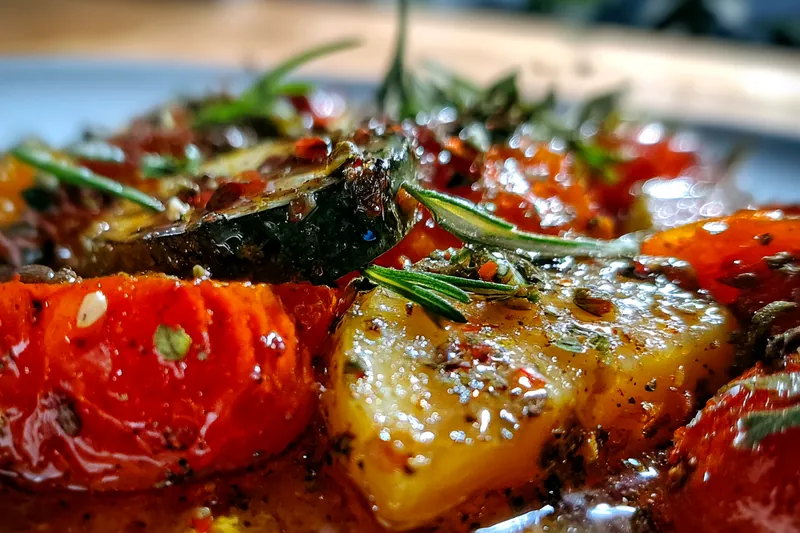
Key Ingredients
The main ingredients for roasted seasonal vegetables include a variety of fresh vegetables like zucchini, bell peppers, and cherry tomatoes. These vegetables not only provide vibrant colors but also a range of nutrients that contribute to a healthy diet. Choosing seasonal produce ensures the best flavor and freshness. Each vegetable brings its unique taste and texture, making the dish both appealing and nutritious.
Seasonings play a crucial role in enhancing the flavor of the vegetables. Olive oil serves as a base for roasting, helping to achieve that perfect crispy texture. Dried herbs like oregano and thyme complement the vegetables beautifully, while salt and pepper elevate the overall taste. A simple yet effective combination, these seasonings allow the natural flavors of the vegetables to shine through.
Essential Ingredient Notes
- Main Ingredient: Zucchini is a fantastic main ingredient for roasting due to its mild flavor and versatility. It cooks quickly and absorbs the flavors of the seasonings well. Rich in vitamins and low in calories, zucchini adds a nutritious touch to your dish. Make sure to slice them evenly for consistent cooking.
- Second Key Ingredient: Bell peppers are another essential key ingredient, providing natural sweetness and a crunchy texture. They come in a variety of colors, each offering a slightly different flavor profile. Grilling or roasting bell peppers enhances their sweetness, making them a favorite for many. Choose firm, vibrant peppers for the best results.
- Essential Seasoning: Olive oil is an essential seasoning that not only helps in cooking but also adds a rich flavor. It allows for even heating of the vegetables, preventing them from drying out. Choose a high-quality extra virgin olive oil for the best taste. A drizzle before serving can also enhance the dish.
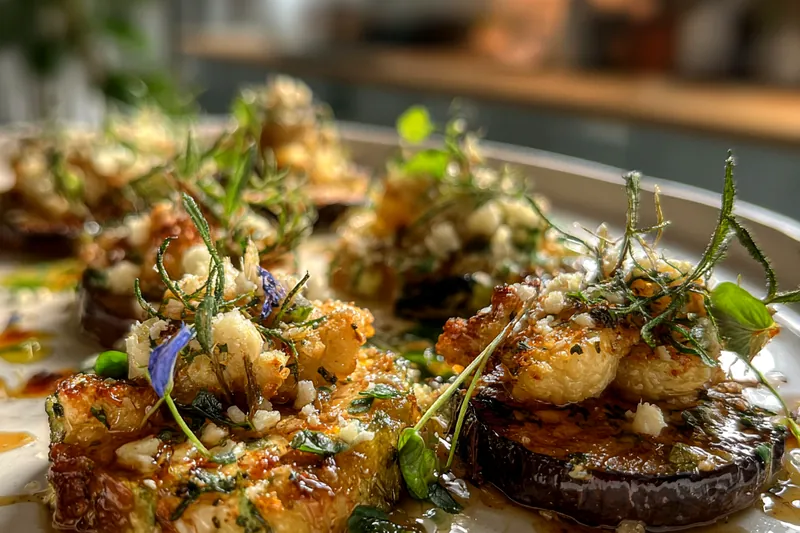
Cooking Process
The cooking process for roasted seasonal vegetables is straightforward and rewarding. After prepping your ingredients, the key is in the timing and oven temperature. Preheating the oven ensures that the vegetables start cooking immediately, which helps in achieving that delicious caramelization. Stirring halfway through promotes even cooking and enhances the flavor.
Once the vegetables are perfectly roasted, don’t forget to garnish with fresh herbs for that extra pop of color and flavor. Serving them immediately maximizes taste and enjoyment. The combination of textures and flavors will surely delight your guests or family. So, take your time during the cooking process and enjoy the aroma that fills your kitchen.
Key Technique
The key technique when roasting vegetables is to ensure they are cut uniformly, which allows for even cooking. Additionally, using high heat is crucial for achieving that crispy texture. Tossing the vegetables in olive oil before roasting not only prevents sticking but also promotes caramelization. Lastly, don’t overcrowd the baking sheet to allow proper airflow and roasting.
Roasted Seasonal Vegetables
📋 Ingredients
Main Ingredients
- 1 teaspoon dried oreganoadds a fragrant note
- 1 teaspoon dried thymeprovides earthy flavor
Sauce/Seasoning
- 2 medium zucchini, slicedfresh and tender
- 1 large red bell pepper, choppedadds sweetness
- 1 medium yellow squash, slicedcolorful addition
- 1 cup cherry tomatoes, halvedjuicy and flavorful
- 1 large red onion, cut into wedgesadds depth
- 2 carrots, slicedfor sweetness
- 4 cloves garlic, mincedboosts flavor
- 4 tablespoons olive oilfor crispiness
Instructions
Prepare the Vegetables
Begin by preheating your oven to 425°F (220°C). While the oven heats up, wash and cut all the vegetables into uniform sizes, which will ensure even roasting.
Season the Vegetables
In a large mixing bowl, combine the chopped zucchini, bell pepper, yellow squash, cherry tomatoes, red onion, and carrots. Drizzle with olive oil and sprinkle with garlic, oregano, thyme, salt, and black pepper.
Toss to Coat
Using your hands or a spatula, toss the vegetables until they are evenly coated with the oil and spices. This step is crucial for enhancing the flavor of your vegetables.
Spread on Baking Sheet
Spread the seasoned vegetables in a single layer on a large baking sheet. Ensure there is enough space between the pieces to allow them to roast rather than steam.
Roast in the Oven
Place the baking sheet in the preheated oven and roast for about 25-30 minutes. Halfway through, stir the vegetables to promote even browning.
Check for Doneness
The vegetables are done when they are tender and slightly caramelized. If you prefer a crispier texture, you may roast them for an additional 5 minutes.
Garnish and Serve
Once roasted, remove the vegetables from the oven and transfer them to a serving dish. Garnish with freshly chopped parsley before serving.
Enjoy Your Dish
Serve your roasted seasonal vegetables warm as a side dish or over a grain for a wholesome meal. Enjoy the burst of flavors and the health benefits!
Recipe Notes & Tips
Storage Tips
To store leftover roasted vegetables, allow them to cool completely before transferring to an airtight container. They can be kept in the refrigerator for up to 3 days. For longer storage, consider freezing them, but be aware that the texture may change upon thawing. When reheating, use the oven for best results.
Serving Ideas
These roasted seasonal vegetables make an excellent side dish for grilled meats, fish, or a hearty grain bowl. They can also be tossed into salads for added flavor and nutrition. Consider drizzling with a balsamic reduction for an extra touch. Experiment with combining different vegetables based on the season for a unique twist.
Variations
Feel free to change up the vegetables based on what's available. Root vegetables like sweet potatoes or turnips make great additions in the fall and winter. In the summer, consider using eggplant or asparagus for a lighter dish. You can also add nuts or seeds for an added crunch and nutritional boost.